Three houses reveal John Stefanidis’s method, where past and present coexist through architecture, antiques, craftsmanship and new furnishings.
PATMOS: TRADITION WITHOUT FOLKLORE
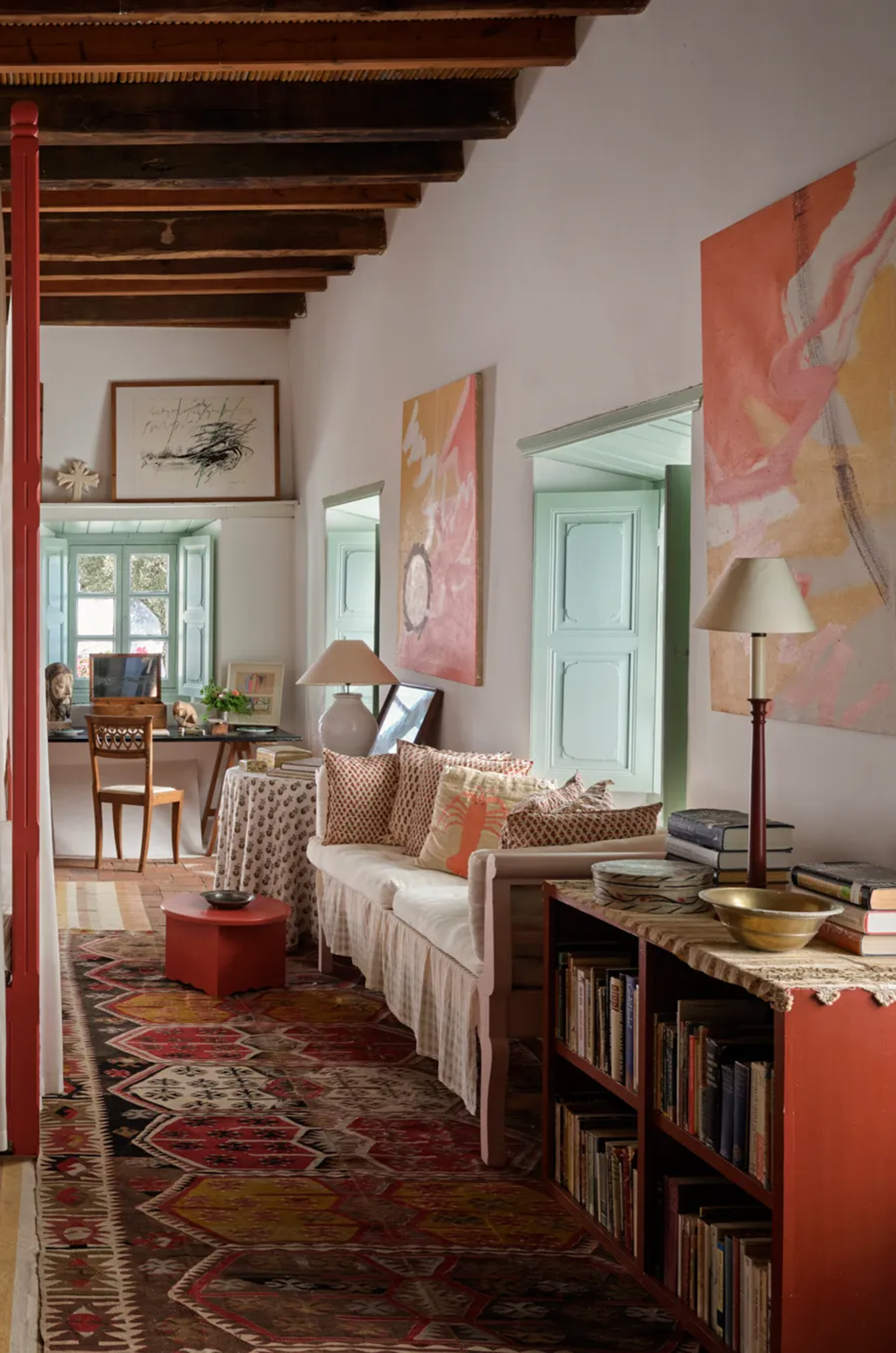
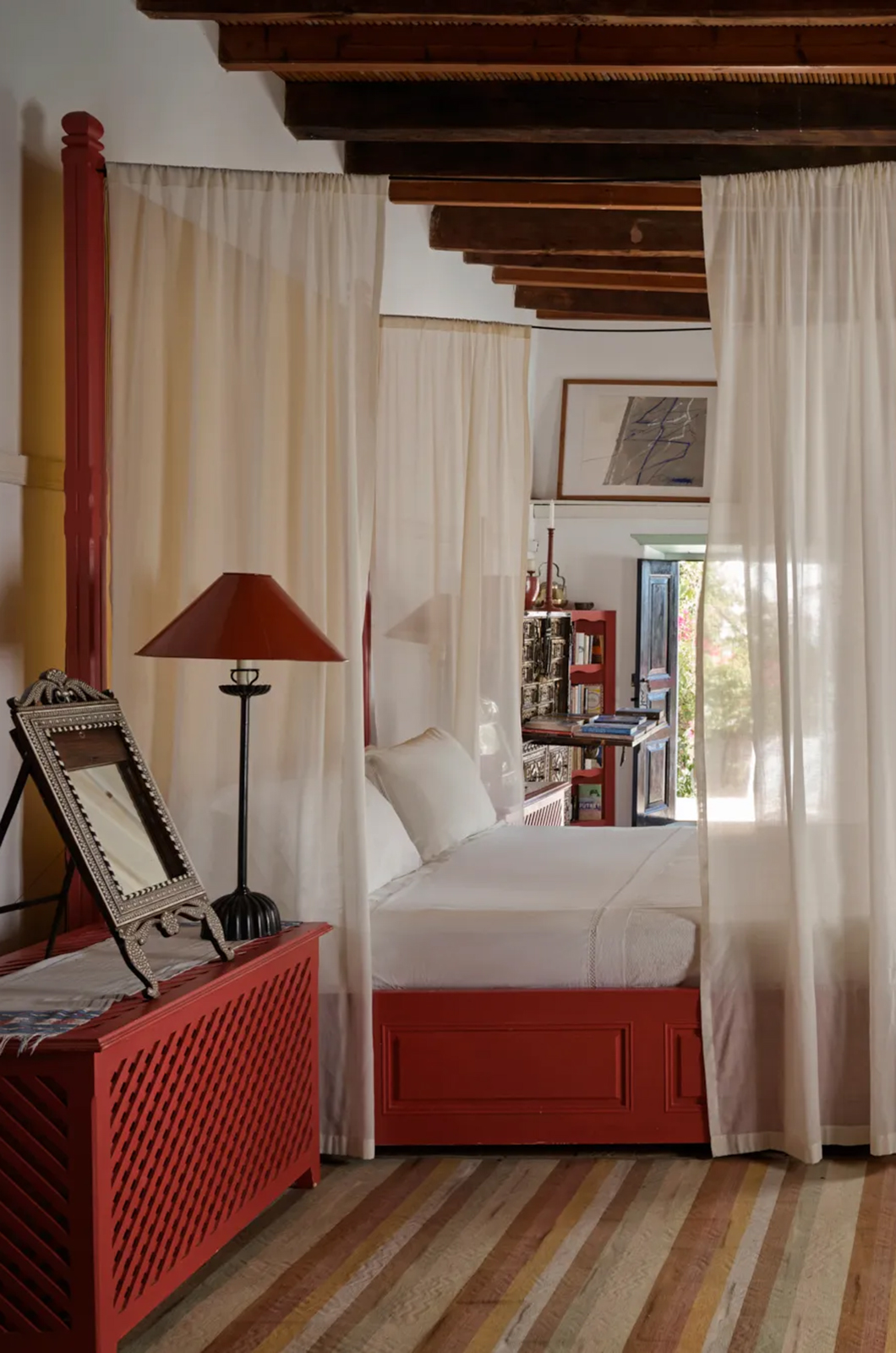
In Patmos, Stefanidis reinterprets the island’s architecture and traditions without giving in to folklore. Inside, the simplicity of the local structures forms a backdrop for rugs, textiles, artworks, antique furniture and pieces of his own design, freely combined.
Tradition is not reconstructed, but becomes the starting point for something new.
NETHERTON: ADDING WITHOUT ERASING
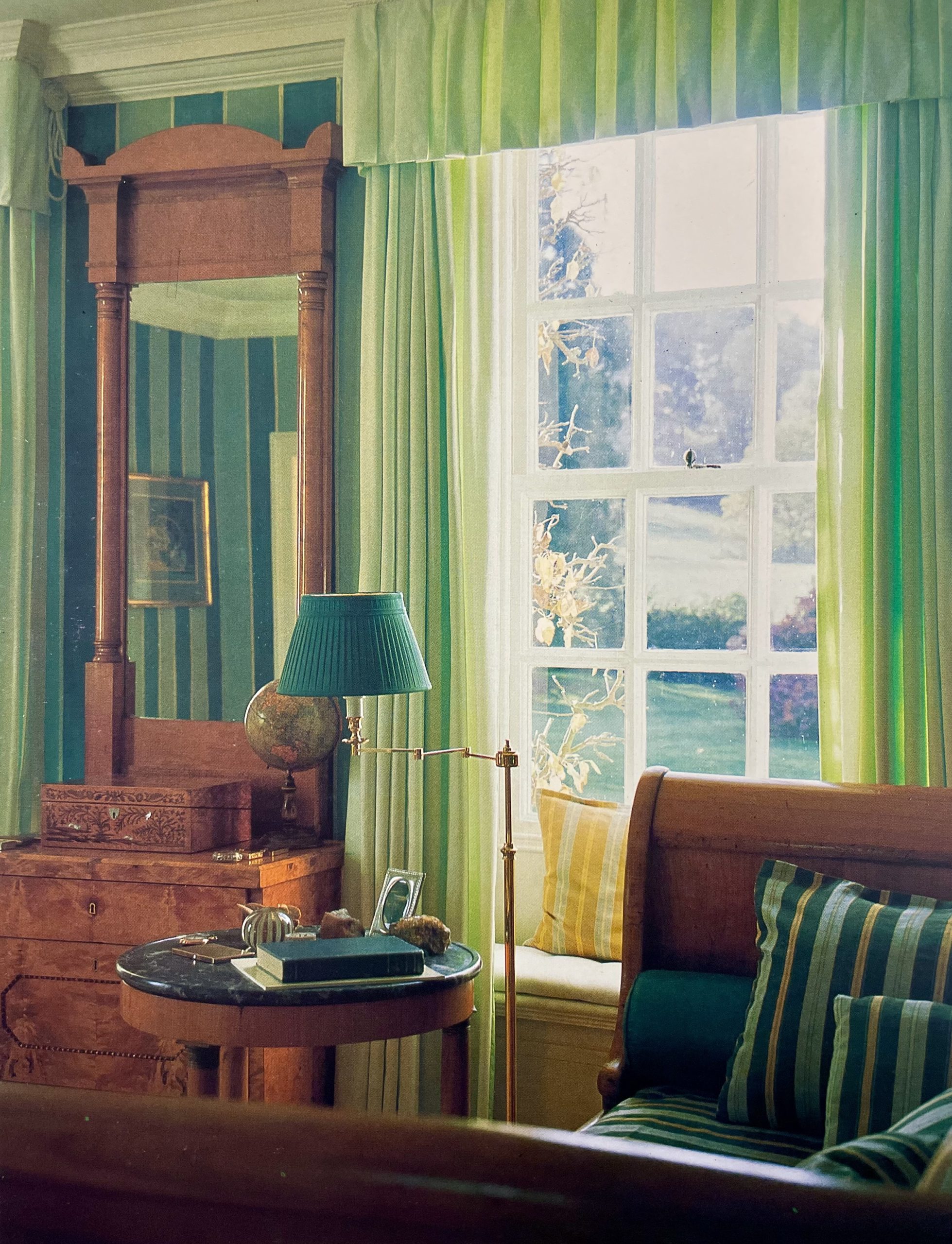
At Netherton, an English country house transformed over the centuries, Stefanidis works with the traces already present without making them uniform. Historic furniture, Biedermeier pieces and new fabrics coexist through combinations of colours, patterns and materials.
The new does not try to impose itself: it is the proportions, materials and architecture of the house that indicate, each time, where to begin.
TORONTO: DIFFERENT ERAS AND ORIGINS
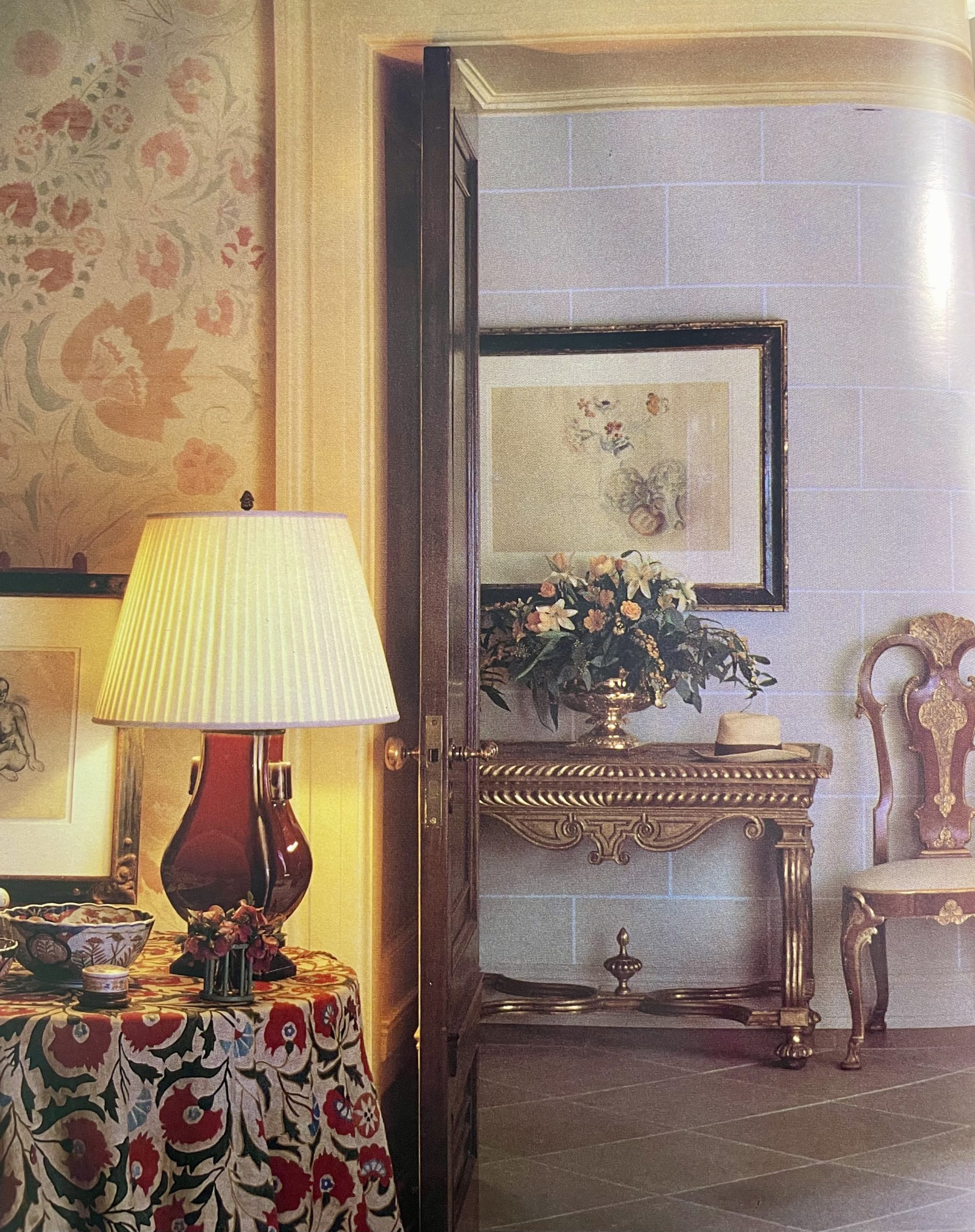
In the Edwardian townhouse in Toronto, Stefanidis combines antiques and furnishings from London, New York, Milan and Paris with fabrics and pieces of his own design. A Suzani embroidery becomes the starting point for the Bokhara fabric, whose pattern is also reinterpreted on the walls.
Different eras and origins are not made uniform: it is the way they are combined that creates continuity.